Skin Biology & Treatment
Skincare for Rosacea and Sensitive Skin
Quick Answer
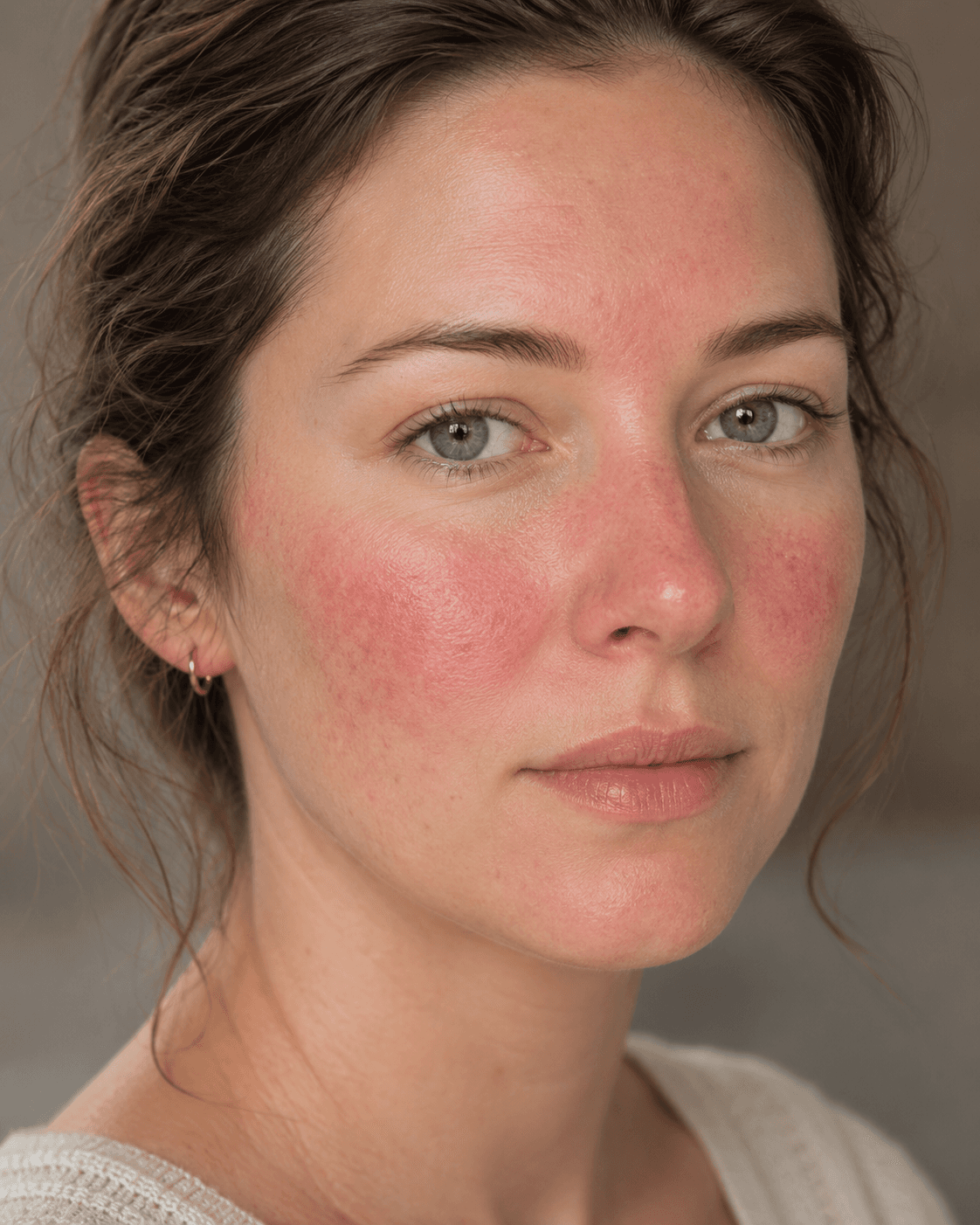
Rosacea is a chronic inflammatory skin condition characterised by persistent redness, visible blood vessels, and heightened sensitivity. It has no cure, but it responds well to consistent skincare that repairs the lipid barrier, delivers anti-inflammatory botanical actives, and eliminates known chemical triggers. The right routine can meaningfully reduce the frequency and severity of flare-ups while progressively strengthening the skin's resilience over time.
Key Facts
How common
Rosacea affects an estimated 5–10% of the global population, most commonly fair-skinned adults over 30
Core mechanism
Chronic neurovascular inflammation combined with a compromised skin barrier and heightened immune response
Primary triggers
UV exposure, heat, synthetic fragrance, alcohol, harsh surfactants, and high-concentration essential oils
Barrier priority
Rosacea is consistently associated with reduced ceramide levels and impaired lipid barrier function
Aphora Botanicals
TERRA GLOW Recovery Night Face Oil, TERRA GLOW Protect Day Face Oil, and TERRA Lumé Deep Hydration Face Cream are formulated with bioactives that nurture and condition rosacea-prone skin
What is happening in rosacea-prone skin
Rosacea is not simply sensitive skin with a different name. It is a distinct chronic condition involving neurovascular dysregulation — the blood vessels in facial skin dilate more easily and more persistently than in unaffected skin, producing the characteristic redness and visible capillaries of the condition.
Alongside this vascular component, rosacea is associated with a measurably compromised skin barrier. Reduced ceramide levels and impaired lipid organisation mean the skin is less effective at retaining moisture and more permeable to environmental triggers. The result is a cycle: barrier disruption increases inflammatory sensitivity, inflammation further weakens the barrier, and rosacea flares become more frequent and more severe.
Understanding this cycle is essential to understanding why the right skincare approach works. The goal is not to suppress redness in the short term. It is to repair the barrier, calm the inflammatory environment, and progressively restore the skin's capacity to regulate itself.
What rosacea-prone skin needs from skincare
Rosacea skin has a specific set of requirements that differ from both normal and generally sensitive skin. Meeting them consistently is the foundation of meaningful improvement.
Barrier repair
Restoring the lipid barrier is the first priority. Look for:
- Fatty acids — particularly linoleic acid (omega-6), which is often deficient in rosacea-prone skin
- Phytosterols — plant-derived sterols that mimic the skin's natural barrier lipids
- Botanical oils that support the skin's own ceramide production — rosehip, sea buckthorn, and evening primrose are naturally high in linoleic acid
- Occlusive botanicals — lightweight plant waxes and oils that reduce transepidermal water loss without blocking pores
Anti-inflammatory actives
Calming the chronic inflammatory environment requires sustained delivery of the right botanical compounds:
- Carotenoids — including beta-carotene and lycopene found in sea buckthorn and rosehip; potent anti-inflammatory and antioxidant
- Bisabolol — derived from chamomile; reduces inflammatory cytokine activity in skin tissue
- Polyphenols — found in green tea extract and grape seed; inhibit inflammatory pathways activated in rosacea
- Tocopherols (Vitamin E) — protect skin lipids from oxidative degradation and support vascular integrity
Trigger elimination
Removing known irritants from the routine is as important as adding beneficial actives:
- Synthetic fragrance — one of the most consistent rosacea triggers; must be avoided entirely
- Denatured alcohol — strips the lipid barrier and causes vasodilation
- SLS and harsh surfactants — disrupt the microbiome and damage barrier lipids
- High-concentration essential oils — particularly citrus, mint, and eucalyptus
- Physical exfoliants — mechanical disruption of already-sensitised skin
Why face oils are particularly suited to rosacea skin
The instinct among many rosacea sufferers is to avoid face oils — associating them with heaviness, congestion, or worsened redness. This is a significant misunderstanding of what botanical face oils do at the skin level, and it leads many people to continue with water-based routines that do not adequately address barrier repair.
Anhydrous formulas — those containing no water — deliver fatty acids, phytosterols, carotenoids, and fat-soluble antioxidants directly into the lipid layer of the skin. They do not require preservation systems. They do not contain the water-soluble irritants that preserved emulsions may carry. And they provide the precise class of molecules that rosacea-compromised skin is typically lacking.
The key is selecting oils rich in linoleic acid rather than oleic acid-dominant oils. Linoleic acid deficiency is specifically associated with compromised barrier function in inflammatory skin conditions. Rosehip oil, sea buckthorn, evening primrose, and hemp seed oil are among the most studied for rosacea-relevant barrier repair.
Building an effective rosacea skincare routine
Consistency matters more than complexity. A rosacea routine does not need to be elaborate — it needs to be reliable. The morning and evening approaches serve distinct purposes.
Morning
- Gentle, fragrance-free, low-surfactant cleanse — or water-only rinse if skin is clean
- Protective face oil — lightweight, anti-inflammatory botanical actives to defend against UV, heat, and environmental stressors throughout the day
- Hydrating moisturiser — barrier-supporting cream to reinforce the lipid layer before SPF
- Mineral SPF — physical UV filters only; chemical filters (oxybenzone, avobenzone) can trigger rosacea in sensitive individuals
Evening
- Gentle double cleanse if wearing SPF — micellar water followed by a low-foam cleanse
- TERRA GLOW Recovery Night Face Oil — richer botanical actives that support the skin's natural overnight repair processes
- Allow the oil to absorb fully before sleep; no occlusive layer required over a well-formulated recovery oil
Aphora Botanicals
Aphora Botanicals: Formulated for Rosacea-Prone Skin
At Aphora Botanicals, three formulas form the core of our approach to rosacea and chronic skin sensitivity: TERRA GLOW Recovery Night Face Oil, TERRA GLOW Protect Day Face Oil, and TERRA Lumé Deep Hydration Face Cream. Each is built around bioactives that work with the skin's own biology — nurturing the barrier, calming the inflammatory environment, and conditioning the skin's capacity to regulate itself over time.
TERRA GLOW Protect Day Face Oil is designed for the demands rosacea-prone skin faces in daylight hours: environmental stressors, temperature variation, and the cumulative burden of UV exposure on already-sensitised vasculature. TERRA GLOW Recovery Night Face Oil works with the skin's overnight repair cycle, delivering a richer concentration of restorative bioactives when the skin is most receptive and least exposed to triggers.
TERRA Lumé Deep Hydration Face Cream provides the hydration and barrier reinforcement that rosacea-prone skin consistently requires — formulated without synthetic fragrance, harsh preservatives, or any of the surfactant or solvent ingredients that characterise conventional moisturisers and that rosacea skin reliably rejects.
These are not products that mask the condition. They are formulated to work progressively — conditioning the skin environment so that the barrier strengthens, flares become less frequent, and the skin recovers more quickly when they do occur. Made for those who recognise the difference.
Comparison
| Skincare That Aggravates Rosacea | Skincare Formulated for Rosacea | |
|---|---|---|
| Fragrance | Synthetic fragrance present — a leading trigger of flares | Fragrance-free; no synthetic fragrance or high-concentration essential oils |
| Preservation | Conventional preservatives that may irritate sensitised skin | COSMOS-approved, minimal preservation; anhydrous formulas require none |
| Barrier approach | Humectant-heavy; may increase TEWL without adequate occlusion | Lipid-focused; delivers barrier-identical fatty acids and phytosterols |
| Actives | High-concentration AHAs, retinol, vitamin C — often too aggressive | Anti-inflammatory carotenoids, bisabolol, polyphenols, tocopherols |
| Surfactants | SLS, SLES — strip barrier lipids and disrupt skin microbiome | Low or no surfactant; gentle cleanse preserves lipid layer |
| Outcome over time | Short-term relief at best; may worsen barrier dysfunction with continued use | Progressive barrier repair and reduced flare frequency with consistent use |
Frequently Asked Questions
Common Questions
No skincare product cures rosacea. It is a chronic condition with a genetic and vascular component that does not resolve permanently. However, consistent use of the right formulations can meaningfully reduce the frequency and severity of flare-ups, strengthen the skin barrier, and progressively improve the skin's resilience over time. The distinction between managing and curing matters — the goal of a rosacea skincare routine is to create a stable, less reactive skin environment, not to eliminate the condition.
The right face oils are not only safe for rosacea — they are among the most effective tools available for barrier repair in this condition. Rosacea skin is consistently deficient in linoleic acid and phytosterols, which are the primary lipids in well-formulated botanical face oils. Oils rich in linoleic acid — including rosehip, sea buckthorn, evening primrose, and hemp seed — can directly address this deficit. The key is selecting oils formulated without synthetic fragrance and without high-concentration essential oils, both of which are common rosacea triggers.
Synthetic fragrance is the most consistent rosacea trigger in skincare and should be avoided entirely. Other ingredients to eliminate include denatured alcohol, SLS and SLES, methylisothiazolinone, high-concentration essential oils (particularly citrus, mint, and eucalyptus), and chemical UV filters such as oxybenzone and avobenzone. Aggressive exfoliating actives — high-concentration AHAs, physical scrubs, and strong retinol — should also be used with significant caution or avoided until the barrier is stabilised.
Meaningful improvement in rosacea-prone skin typically requires consistent use of the right routine for a minimum of 8 to 12 weeks. Barrier repair is a gradual biological process — ceramide synthesis and lipid organisation cannot be accelerated significantly beyond the skin's own renewal cycle. Short-term reductions in redness may be visible within days of eliminating trigger ingredients, but the progressive strengthening of the barrier and reduction in flare frequency is a longer arc. Patience and consistency are the determining factors.
No. Sensitive skin is a broad descriptor for skin that reacts readily to environmental or product stimuli — it is a symptom pattern, not a diagnosis. Rosacea is a distinct chronic inflammatory condition with a specific vascular and immunological mechanism. Some people with rosacea also have generally sensitive skin, but many do not — their skin may be entirely comfortable with most products outside of specific rosacea triggers. Treating rosacea as simply 'sensitive skin' often leads to routines that soothe but do not address the underlying barrier dysfunction and chronic inflammation that drive the condition.
Continue Reading
Related Articles
Barrier Science
Why Your Skin Barrier Is a Recipe, Not an Ingredient
ReadAcids & The Barrier
Why Mandelic Is the Strongest Acid We Use
ReadThe Science of Formulation
Why Retail Store Brands Add Preservatives
ReadClean Beauty & Formulation
Refrigerated Skincare: The Future of Truly Clean Beauty
ReadSkin Biology