The Science of Formulation
Why Retail Store Brands Add Preservatives
Quick Answer
Where water is present in a skincare formula, antimicrobial preservation is required to keep the product safe. The question is not whether a water-based product is preserved, but how — and at what cost to skin. Several of the most widely used cosmetic preservatives carry documented regulatory concerns: certain parabens have been restricted or banned outright in the EU on endocrine grounds, formaldehyde-releasing systems work by releasing trace formaldehyde — classified by the IARC as a Group 1 human carcinogen, and methylisothiazolinone (MI) has been banned in EU leave-on cosmetics following a contact-sensitisation epidemic. Anhydrous and fresh-batch formats sidestep most of these compromises by design.
Key Facts
When preservation is needed
Water-containing formulas require antimicrobial preservation; anhydrous (oil-only) formulas do not
EU banned outright
Isopropylparaben, isobutylparaben, phenylparaben, benzylparaben, pentylparaben (EC 1223/2009 Annex II)
EU restricted
Propylparaben + butylparaben capped at 0.14% combined; MI banned in leave-on cosmetics; MCI restricted to rinse-off only
Formaldehyde-releasers
Function by slowly releasing formaldehyde — IARC Group 1 carcinogen
Aphora Botanicals
Anhydrous wherever possible; fermentation-derived preservation where water is present; no parabens, no formaldehyde-releasers, no MI, no ethylhexylglycerin
Why water-based formulas require preservation
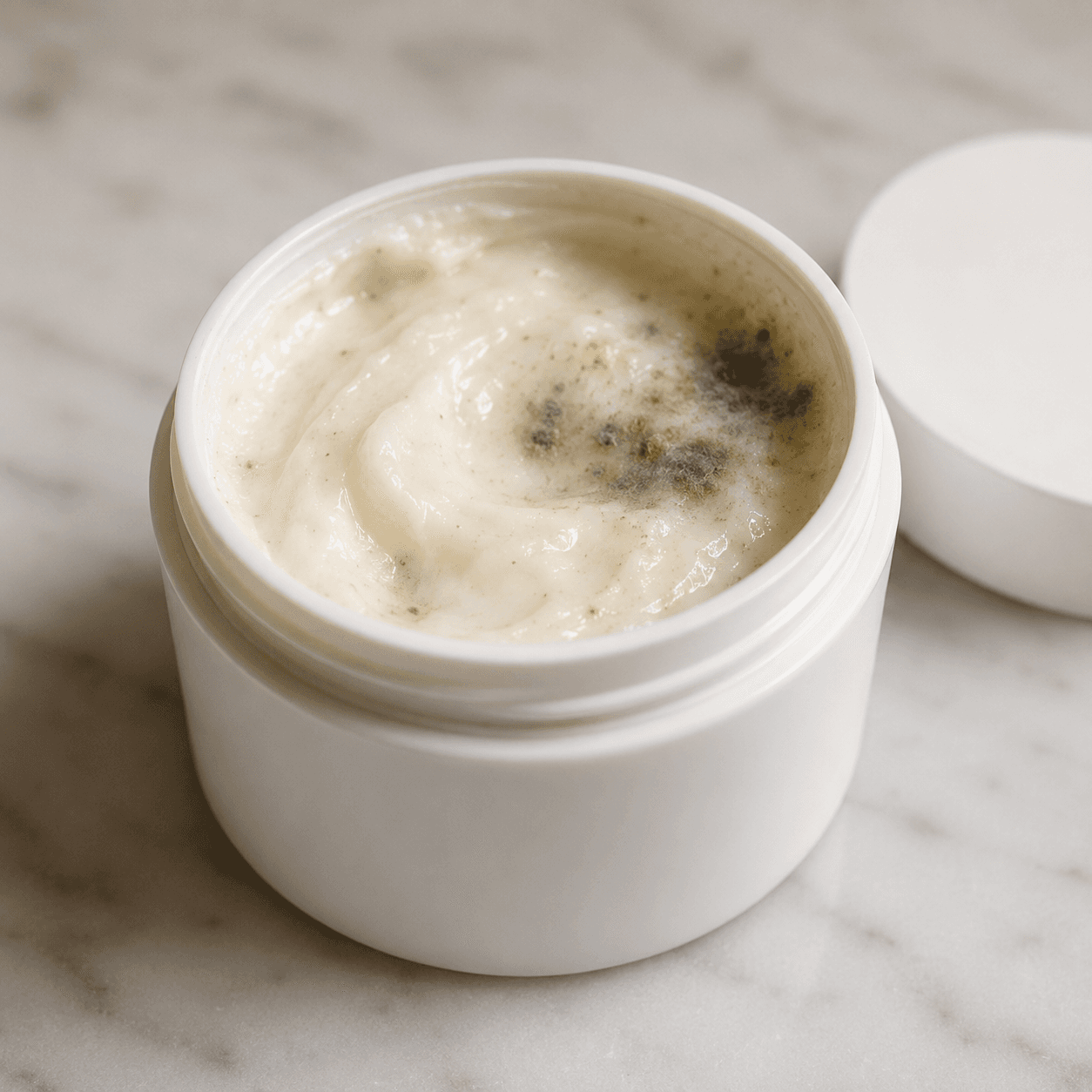
Water is the primary driver of microbial activity in skincare. Formulas containing water — whether as the first ingredient or as part of an emulsion — create an environment in which bacteria, yeast, and mould can proliferate rapidly at room temperature. Without a functioning preservation system, a water-based product can become unsafe to apply to skin within days.
The need for preservation is real. The question is what preservation systems a brand chooses, at what concentrations, and whether the supply chain forces a level of antimicrobial aggression that the skin then has to absorb daily.
A mass-market skincare product is engineered to survive every stage of a long, temperature-variable journey:
- Manufacturing and quality-control facilities
- Warehouses and distribution centres with inconsistent climate control
- Shipping containers crossing varying climates over weeks
- Retail shelves where products may sit for months before purchase
- Bathroom environments where the product is repeatedly opened, exposed to humidity, and contaminated by fingers
The trade-offs of conventional preservation systems
Preservation systems are not interchangeable. Each carries a distinct dermatological and regulatory profile, and several of the most widespread choices have been the subject of significant regulatory action over the past decade.
Parabens — endocrine concerns and EU regulatory response
Parabens are inexpensive, broad-spectrum antimicrobials that dominated cosmetic preservation for decades. Several have since been restricted or banned in the EU.
- Banned outright in EU cosmetics (EC 1223/2009 Annex II): isopropylparaben, isobutylparaben, phenylparaben, benzylparaben, pentylparaben — withdrawn by the European Commission citing insufficient safety data, including potential endocrine effects
- Restricted in EU cosmetics: propylparaben and butylparaben capped at 0.14% combined in leave-on products following SCCS opinions noting weak estrogenic activity in in-vitro and animal studies
- Banned in EU products marketed for children under three on the nappy area
- Methylparaben and ethylparaben remain permitted at up to 0.4% individually — but they are typically combined with other parabens, so cumulative exposure across a routine merits consideration
Formaldehyde-releasing preservatives
These preservatives function by slowly releasing trace formaldehyde over time. Formaldehyde itself is classified by the International Agency for Research on Cancer (IARC) as a Group 1 — known human — carcinogen, primarily on the basis of occupational inhalation exposure.
- DMDM hydantoin
- Imidazolidinyl urea
- Diazolidinyl urea
- Quaternium-15
- Bronopol
Methylisothiazolinone (MI) and methylchloroisothiazolinone (MCI)
Once widely adopted as paraben-replacements, MI and MCI triggered what the European Society of Contact Dermatitis described as an epidemic of contact allergy between 2010 and 2016. EU regulatory response followed:
- MI banned outright in EU leave-on cosmetics from 2017
- MCI restricted to rinse-off products only, at a maximum concentration of 0.0015%
- Both preservatives are still permitted in some non-EU markets — including in leave-on products in the United States and Australia, subject to labelling rules
Ethylhexylglycerin and phenoxyethanol
Often presented as 'gentler' modern alternatives, both have established sensitisation profiles in the dermatology literature.
- Ethylhexylglycerin — multifunctional booster; reported in case literature as a contact allergen, sometimes mistaken for an unrelated paraben allergy in patch testing
- Phenoxyethanol — restricted to 1% in EU cosmetics; SCCS has reviewed its safety multiple times and confirmed limits; not appropriate for products used on broken skin or by infants
What "safe at permitted levels" actually means
Regulators set concentration limits per preservative, per product category, typically based on a single product's contribution to daily exposure. The limits are scientifically defensible in that framing.
What the framing does not capture is the cumulative reality of a modern routine: a cleanser, toner, serum, moisturiser, sunscreen, lip product, hand cream, and body lotion may each independently sit within their permitted preservation limits, while the user's daily exposure to a given preservative class — applied to the same skin, over the same hours, across years — has never been formally evaluated.
This is not an argument that preservatives are categorically unsafe. It is the basis for a more conservative formulation philosophy: where a preservative can be avoided by design — through anhydrous formats, fermentation-derived preservation, or short-supply-chain distribution — the cumulative-exposure question stops needing to be asked.
Preservation sensitivity and reactive skin
For people with reactive, sensitised, or compromised skin barriers, preservation chemistry is rarely an abstract concern. Several cosmetic preservatives are recognised contact allergens in dermatological practice, and patch testing for cosmetic preservatives is a standard part of investigating recurring cosmetic-triggered irritation.
Common patterns include:
- Stinging or burning shortly after product application
- Redness or erythema that resolves only when the offending product is withdrawn
- Recurrent low-level dermatitis without an obvious single trigger — characteristic of cumulative-exposure reactions
- Progressive barrier disruption with continued use of formulas containing potent preservation systems
Alternatives that don't require these trade-offs
Three formulation strategies allow products to either avoid conventional preservation altogether or use the gentlest available systems:
- Anhydrous formats — facial oils, balms, salves, solid cleansers, and pressed powders contain no water and require no antimicrobial preservation; antioxidant protection (vitamin E, rosemary extract) prevents oxidative rancidity but is not a preservative
- Fermentation-derived preservation — Leuconostoc/Radish Root Ferment Filtrate and similar postbiotic actives provide broad-spectrum protection through naturally produced antimicrobial peptides; recognised by COSMOS and Ecocert
- Short supply chains and fresh-batch production — direct-to-consumer brands working from fresh production runs can target shorter shelf lives, allowing them to use the gentlest effective preservation systems rather than the most aggressive
Aphora Botanicals
The Aphora Botanicals Approach to Preservation
At Aphora Botanicals, preservation is treated as a formulation decision with direct dermatological consequences — not a logistical afterthought. Mass-market preservation systems exist to solve a mass-market problem: extended shelf life across a long supply chain. We have built a different supply chain, and so we are not forced into the same compromises.
Our fresh-batch, direct-distribution model targets shorter storage timelines from production to skin. This allows us to use only the gentlest preservation systems where preservation is required at all. In select water-containing formulas, we use Leuconostoc/Radish Root Ferment Filtrate — a fermentation-derived antimicrobial active recognised by COSMOS and Ecocert. Where formulas are anhydrous, we use no preservatives, because none are needed.
We do not use parabens, formaldehyde-releasing preservatives, methylisothiazolinone or methylchloroisothiazolinone, ethylhexylglycerin, or synthetic fragrance. This is the deliberate outcome of formulating for skin first and supply chain second.
Comparison
| Conventional Preservation | Aphora Approach | |
|---|---|---|
| Primary design driver | Shelf life across a long supply chain | Skin compatibility and ingredient integrity |
| Preservation systems used | Multi-layered; may include parabens, formaldehyde-releasers, MI/MCI, ethylhexylglycerin | Anhydrous where possible; fermentation-derived where water is present |
| Shelf life target | 24–36 months unopened | 6–12 months unopened, fresher on application |
| Distribution model | Global retail, warehoused inventory | Direct-to-consumer, limited production runs |
| Cumulative-exposure profile | Daily exposure to multiple preservative classes across a routine | Minimised by design — fewer preservatives, gentler chemistry |
Frequently Asked Questions
Common Questions
Several parabens — including propylparaben and butylparaben — have shown weak estrogenic activity in in-vitro and animal studies, which is why the EU Scientific Committee on Consumer Safety (SCCS) issued opinions restricting their use. The EU subsequently banned five parabens outright (isopropylparaben, isobutylparaben, phenylparaben, benzylparaben, pentylparaben) and capped the combined concentration of propylparaben and butylparaben at 0.14% in leave-on products. Clinical evidence in humans at cosmetic use levels remains incomplete, but the regulatory pattern reflects a precautionary stance: where weak endocrine activity has been demonstrated in laboratory settings, restricting cumulative cosmetic exposure is considered a reasonable response.
EU Cosmetics Regulation EC 1223/2009 governs which preservatives may be used and at what concentrations. Banned outright (Annex II): isopropylparaben, isobutylparaben, phenylparaben, benzylparaben, pentylparaben. Restricted (Annex V): propylparaben and butylparaben (max 0.14% combined in leave-on products), methylisothiazolinone (banned in leave-on cosmetics from 2017), methylchloroisothiazolinone (rinse-off only, max 0.0015%), phenoxyethanol (max 1%). Formaldehyde-releasing preservatives remain permitted but must declare 'releases formaldehyde' on the label if total free formaldehyde exceeds 0.05%.
Generally, no. Regulatory concentration limits are set per preservative, per product, based on a single product's contribution to daily exposure. A routine of seven or eight separately compliant products will deliver several preservative classes to the same skin every day, year after year — and this aggregate exposure profile is not formally evaluated. For sensitive or barrier-compromised skin, and for users wishing to apply a precautionary principle, choosing formulations that minimise preservation altogether (anhydrous formats) or use the gentlest available systems is a reasonable response.
Aphora Botanicals avoids conventional preservation chemistry by design. The majority of our range is anhydrous — facial oils, balms, salves, and solid formats — which require no antimicrobial preservation at all. For select water-containing formulas, we use Leuconostoc/Radish Root Ferment Filtrate, a fermentation-derived antimicrobial active recognised by COSMOS and Ecocert. We do not use parabens, formaldehyde-releasing preservatives (DMDM hydantoin, imidazolidinyl urea, diazolidinyl urea, quaternium-15, bronopol), methylisothiazolinone, methylchloroisothiazolinone, ethylhexylglycerin, or synthetic fragrance.
Yes — but only when no water is present. Anhydrous formats (oils, balms, salves, solid cleansers, pressed powders) require no antimicrobial preservation because the microbes that drive preservation requirements cannot proliferate without water. These formulas may still contain antioxidants such as vitamin E or rosemary extract to protect oils from oxidative rancidity, but antioxidants are not preservatives and serve a different stability function. Water-containing products marketed as 'preservative-free' should be treated with scepticism unless they are refrigerated and used within a very short window.
Preservatives prevent microbial growth — bacteria, yeast, and mould — within water-containing formulas. Antioxidants prevent oxidative degradation of oils and botanical actives, protecting them from rancidity and loss of efficacy; they do not provide antimicrobial protection. A facial oil may contain no antimicrobial preservative (as it contains no water) but include vitamin E or rosemary extract as antioxidant protection. The two ingredient classes are often conflated in marketing copy, but they address entirely different stability problems.