Gentle · Detoxifying · Biodegradable
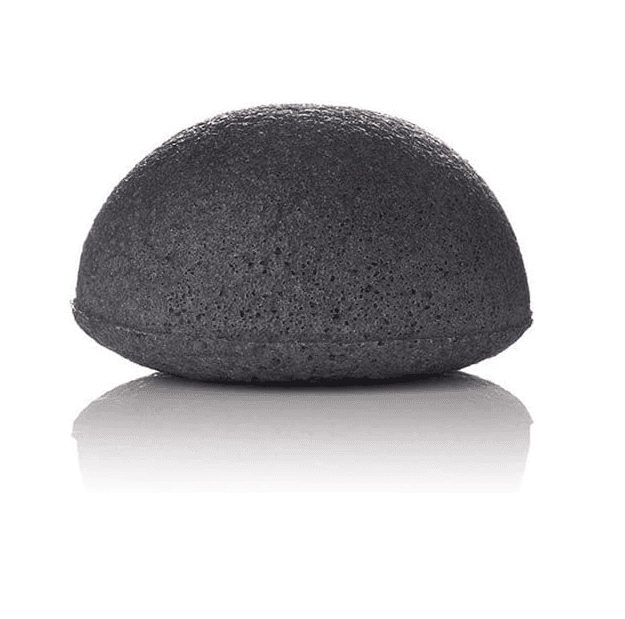
Charcoal Konjac
Facial Sponge
A plant-fibre cleansing sponge from the Konjac root, infused with activated charcoal. Hard when dry, silky soft when wet — the gentlest daily exfoliation we know of.
$5.00
In Short
The Konjac plant — a porous root vegetable native to East Asia — has been used in Japanese and Korean skincare for centuries for its uniquely gentle exfoliating properties. We've taken that fibre and infused it with activated charcoal: pure biodegradable plant fibre that draws oil, environmental film, and pore-line debris off the skin without harshness.
Format
Plant-fibre sponge — hard when dry, silky soft when wet
Skin Type
All skin types · safe for sensitive and infant skin
When
Daily — as the second cleanse, after Rose Bloom & Balance
Lifespan
4–6 weeks · 100% compostable at end of life
Why Konjac
Hard when dry.
Silky soft when wet.
Compostable at the end.
Most facial cleansing aids fall into two camps: harsh enough to actually clean (and risk barrier damage), or gentle enough to feel safe (and not really do anything). Konjac is the rare third option — physically soft as silk against the skin, yet its naturally porous structure lifts surface debris that water and a cleanser alone leave behind.
Our sponges add activated charcoal — bound into the fibre, not transferred to the skin — for an extra layer of adsorptive cleaning. The result is a daily ritual that doesn't compromise the barrier and doesn't generate microplastic waste at end of life.
The Materials
Two ingredients. Nothing else.
No glues, no synthetic fibres, no chemical treatments. Plant and carbon — pressed into shape and dried.
Konjac Root Fibre
Amorphophallus konjac
Mechanism. A porous root vegetable native to East Asia. When the fibre is processed and rehydrated, it forms a soft, jelly-like sponge that holds water without harsh texture. Naturally alkaline (pH 8.0–8.5), making it gentle on the skin's barrier.
Outcome. Daily exfoliation without abrasion. Suitable for sensitive, reactive, and even infant skin.
Activated Charcoal
Carbo activatus
Mechanism. Carbon processed at extreme temperature to develop a vast network of micro-pores. The surface area binds oil, environmental film, and surface debris through physical adsorption — pulling them away from the skin rather than dissolving them with surfactants.
Outcome. Daily detox of the pore-line without stripping. Particularly effective for oily, congested, or blemish-prone skin.
Setting the Record Straight
Sponge Myths vs The Science
| The Myth | The Science |
|---|---|
| “All sponges harbour bacteria” | Konjac dries to hard fibre between uses, denying bacteria the moisture they need to multiply. Bathroom synthetic sponges stay damp; konjac does not. |
| “Daily exfoliation damages the barrier” | True for acid-based or grit-based exfoliants. Konjac exfoliates through gentle physical motion of soft hydrated fibre — closer to a soft cloth than to a scrub. |
| “Charcoal sponges stain your skin” | The activated charcoal is bound into the konjac fibre matrix. It binds to oil and debris through adsorption but doesn't transfer pigment to the skin. |
| “Plant sponges are less effective than synthetic ones” | Konjac's natural microstructure has more surface area per square cm than most synthetic cleansing aids — and the charcoal infusion adds adsorptive cleaning that synthetic sponges can't replicate. |
Outcomes
What You'll Notice
Within Days
- Smoother surface texture after each cleanse
- Better makeup removal with no scrubbing
- Less daily product residue
Within Weeks
- Visibly clearer pore line
- Reduced surface congestion
- More even daily skin texture
With Continued Use
- Long-term clarity without chemical exfoliants
- Skin that handles daily routines better
- Reliance on the gentlest possible exfoliation
At Aphora Botanicals
The right tool matters
as much as the right formula.
Most of our range is about what's inside the bottle. This is about what does the actual work of cleansing in the first place. A poor exfoliating tool undoes the work of a good serum; the right one extends it.
We chose konjac because it represents a centuries-old answer to a problem the modern skincare industry hasn't really improved on: how do you exfoliate the face daily without damaging the barrier. The answer turns out to be a Japanese root vegetable.
Made for those who recognise the difference.
The Ritual
How to Use
- One
Hydrate the sponge.
Submerge in warm water for about a minute, until the dry fibre softens to a jelly-like texture. Gently squeeze (do not twist) to remove excess water.
- Two
Add a small amount of cleanser.
Apply a pea-sized amount of your usual cleanser to the wet sponge. The sponge will foam it across the surface. For makeup-free days, water alone works too.
- Three
Massage in slow circles.
Work across face, neck, and décolletage in slow circular motion. Spend extra time on the T-zone and around the nose where surface debris accumulates.
- Four
Rinse and hang to dry.
Rinse the sponge thoroughly until water runs clear. Gently squeeze. Hang from the cotton string to dry — the sponge dries hard, which prevents bacterial growth.
Care & End of Life
Born from a plant. Returns to one.
Daily Care
Rinse thoroughly, gently squeeze, hang to dry on its cotton string.
Weekly Refresh
Submerge briefly in just-boiled water for ~30 seconds to sanitise.
Replacement
Every 4–6 weeks. Compost the old sponge — it breaks down in weeks.
Honestly Made
Clean by composition, not by claim.
Questions
What People Ask About the Konjac Sponge
As the second cleanse, immediately after the first cleanse (Rose Bloom & Balance Cleansing Oil + the 100% cotton face cloth to finish). The cleansing oil dissolves what's oil-soluble — makeup, sunscreen, sebum, the daily film of pollution and product. The cotton cloth lifts the last residue the rinse leaves behind. The Konjac sponge then physically lifts what remains at the surface: water-soluble debris and any deeper pore-line build-up. Together they form what skincare science calls a double cleanse — the foundation step of every well-built daily routine. The result is skin properly prepared for the toner, treatment, oil, and cream that follow, without the lipid-stripping of a foaming cleanser.
Daily, morning and/or evening, as the second cleanse after Rose Bloom & Balance. Konjac is gentle enough for daily use because it exfoliates through physical motion (massaging the sponge) rather than chemical action. The evening cleanse is where the sponge does its most useful work — the day's makeup, sunscreen, and pollution film need to come off thoroughly. For sensitive or reactive skin, start every other day and increase from there.
Four to six weeks of daily use is typical. The sponge will tell you when it's done — it softens, loses some of its springiness, or begins to feel less firm even when fully hydrated. At end of life, the sponge is fully compostable: drop it into the garden bed and it returns to soil within a few weeks.
Rinse thoroughly under warm running water after each use, gently squeeze out excess water (don't twist — that breaks fibres), and hang to dry from the cotton string. The sponge dries hard, which prevents bacterial growth between uses. Once a week, you can refresh it by submerging in just-boiled water for 30 seconds.
Yes — konjac is one of the gentlest exfoliating materials available, often recommended for use on babies' skin in Japan and Korea. The fibre is naturally alkaline and contains no abrasives, chemicals, or fragrances. The activated charcoal in our version is inert and binds to surface debris without irritating the skin itself. Suitable for use from a young age.
A cotton washcloth scrubs through friction — useful but often too harsh for daily facial use. Konjac works by physical adsorption (the charcoal binding to debris) plus the gentlest possible massage of the wet fibre. The texture is closer to silk than terry cloth, so you get the cleansing benefit without the micro-abrasion that contributes to barrier disruption over time.
Yes — and we'd specifically pair it with Rose Bloom & Balance Cleansing Oil. The oil cleanser is the first step; the sponge is the second. Together they clean more thoroughly than either alone, and gentler than any foaming cleanser. The sponge works the small amount of residual cleansing oil into a soft milk and distributes it across the skin, then rinses everything away cleanly. Many users find they can halve their normal cleanser dose with the sponge in rotation. For makeup-free days, the sponge alone with warm water is enough.
Continue Reading